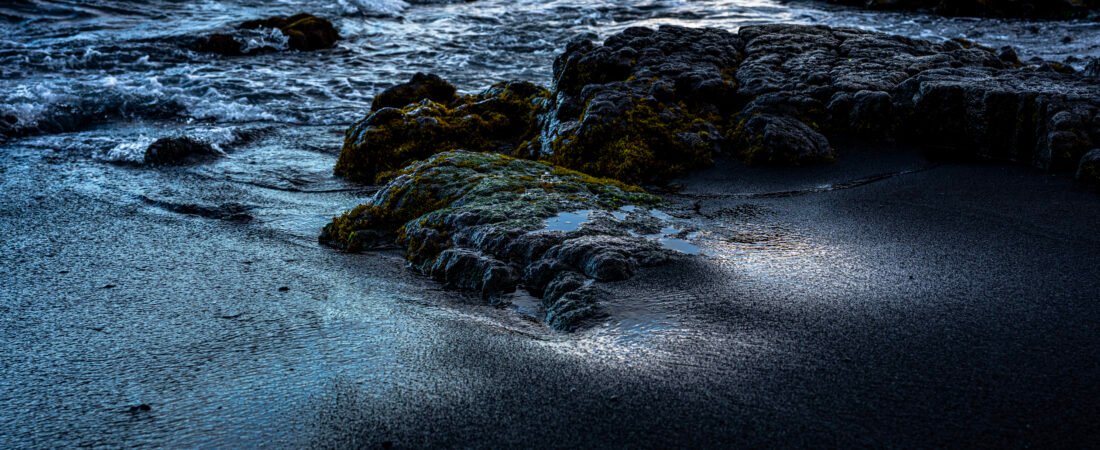
After two years of international travel, Darling Wife (“DW”) was ready for a break from heading abroad again this summer. Even though I came across a few good miles and points deals to some interesting international destinations, she made it clear she wasn’t budging. At that point, I wasn’t sure if we’d end up taking a second summer trip at all—until a deal popped up for Hawaiian Airlines tickets from LA to Hawaii in first class for only 40K miles per person, one-way. Since the tickets were fully refundable, I booked them without thinking twice. We hadn’t been to LA since 2019 and I figured the kids would enjoy a return visit. Although we’ve been to Hawaii twelve times and I was hoping to explore somewhere new, Little One had only faint memories of our previous trips, and everyone else was eager to go back.
Part 1 – Planning and Preparation
Once I had the flights from LA to Hawaii locked in, the next step was finding flights from New York to LA and return flights from Hawaii back to New York. I had a large stash of Chase Ultimate Rewards that needed to be used, and ended up booking AA Flagship First from NY to LA for about 73,000 points per person, which was the least expensive first-class option I could find. (One travel macher I know said it’s “pretty decent.”) The return from Hawaii to NY wasn’t nearly as compelling, with Hawaiian Airlines standard first class redemptions coming in at 130,000 miles per person, but I wasn’t able to find better (I did, however, previously transfer a large amount of Amex points to Hawaiian way back when there was a transfer bonus, so the real cost was less). For accommodations, I booked three nights at the Waldorf Astoria Beverly Hills (using Hilton points), five nights at the Mauna Kea Beach Hotel on the Big Island (using Marriott points), and nine nights at a VRBO rental in Volcano (for cash), also on the Big Island.
We deliberately chose to return to the Waldorf Astoria Beverly Hills, as it’s still the best points redemption option in LA. That said, there was a noticeable decline in the overall quality of the experience compared to our last stay. While the visit was pleasant enough, the differences were hard to ignore. For example, the concierge completely brushed off my request for kid-friendly activity recommendations — he promised to email me and never followed up. Room deliveries now come with a $10 fee, and even asking to have the mini-fridge cleared (so the kids wouldn’t accidentally grab anything) also triggered a $10 charge. The previously ever-present doorman who would warmly greet guests and hold the door was no longer a regular presence. I could list more, but overall, it was clear that the service standards we had come to expect from the Waldorf have slipped noticeably. Information about the Waldorf Beverly Hills can be found here:
https://www.hilton.com/en/hotels/laxwawa-waldorf-astoria-beverly-hills
In the past, when visiting the Big Island, we’ve typically split our time between Kona and Volcano. Kona offers all the classic beach activities, while Volcano provides the thrill of Volcanoes National Park — with incredible hiking and the chance to witness live eruptions or lava flows. We decided to follow the same plan for this trip.
When I asked friends in Hawaii for hotel recommendations in Kona, the response was unanimous: the Mauna Kea Beach Hotel, a Marriott property. Originally built by Laurance S. Rockefeller in the 1960s, the hotel sits on one of the most beautiful soft-sand beaches in the area — Kaunaʻoa Bay. Rockefeller chose this site after spotting the bay during a helicopter tour of the Hawaiian Islands. After landing and swimming in its clear waters, he was captivated by the contrast between the pristine white sand, the rugged lava-rock landscape, and the distant summit of Mauna Kea. Inspired by the setting, he decided to build the hotel there.
That said, our stay at the Mauna Kea Beach Resort wasn’t without issues. The property was undergoing renovations during our visit, which meant the pools were closed — and, as we later discovered, the laundry facilities were also out of service. I did end up complaining when the manager of the sister property next door – the Westin Hapuna – refused to allow us to use their pool (because the hotel was fully booked), and about the hassle of having to drive next door to do our laundry. As a result, we were refunded one night for each of the two rooms. Despite those inconveniences, we still enjoyed our time at the Mauna Kea and wouldn’t hesitate to return once the renovations are complete. Information about the Mauna Kea Beach Hotel can be found here:
https://www.maunakearesort.com
When it came to finding a place to stay in Volcano, things got a bit tricky. With the exception of Volcano House, there are no large hotels in Volcano, so accommodations are limited to home and vacation rentals. Our favorite Airbnb-style rental had gone off the market after the pandemic, and we had a hard time finding a replacement that met our expectations. After spending a lot of time browsing both Airbnb and VRBO, we eventually settled on a large 4-bedroom, 3-bathroom rental on VRBO. While the kids appreciated having their own rooms and the space was definitely generous, I wouldn’t return — and wouldn’t recommend this property. The exterior door was very flimsy and poorly secured, and several window locks were broken. In fact, the front window could be opened from the outside when we arrived. The home felt dated and somewhat rundown. One bathroom on the main floor had a tub but no shower, and the other featured an oddly designed accessible shower that wasn’t very practical. Although the house had a large covered lanai, it looked directly onto a neighboring bungalow, which didn’t offer much in the way of privacy or views. Privacy was further compromised by a large glass wall in the living and dining area, along with clear glass windows in every bathroom. To top it off, we were charged an additional $60 at checkout for a few minor stains — a petty and disappointing end to the stay. All in all, the downsides outweighed the positives. I won’t be sharing a link to this specific rental, but if you’d like details to help avoid booking it by mistake, feel free to reach out.
Part 2 – First Class to Five-Star: A Luxurious Journey to Los Angeles
As mentioned earlier, we booked AA Flagship First from New York to LA for about 73,000 points per person — and it turned out to be an incredibly luxurious experience, unlike anything we’d ever flown before. American Airlines offers Flagship First passengers a private check-in area at JFK, complete with expedited security and access to multiple lounges. From start to finish, we were treated with a level of service we’d never experienced before on a domestic flight. After check-in, we were directed to the Chelsea Lounge, which does offer Fresko kosher meals upon request. Unfortunately, the meals we received were mostly inedible — a disappointing note in an otherwise exceptional ground experience.
Photographs taken at Chelsea Lounge/JFK:

And then we were off to LA:

Photographs from our flight:
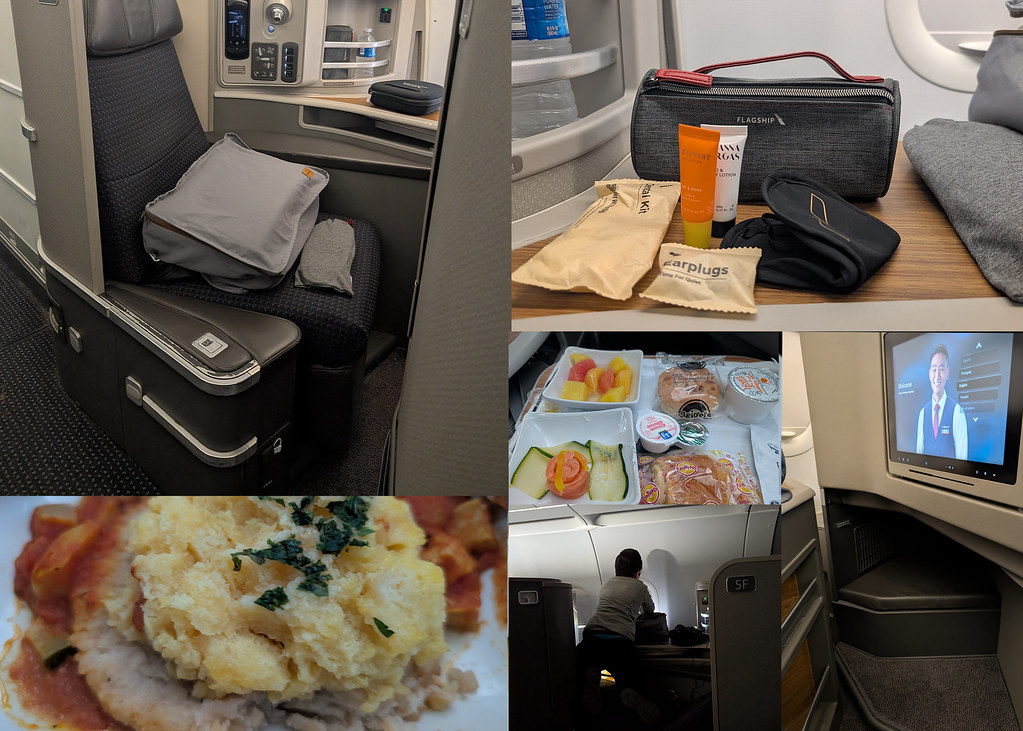
The meal on the flight was from Regal and while not great, it was edible.
After picking up our car rental from Hertz, we headed over to the Waldorf Astoria Beverly Hills:

Part 3 – Eating Our Way Through LA
We only had two and a half days to spend in LA, and DW wanted to make the most of trying out the various kosher restaurants. We tried out Beverly Hills Thai Kosher, Delice Bakery, Formaggi Pizza, Lenny’s Casita, Next Door, and Pizza World. On our first day, we headed over to Lenny’s Casita, information about which can be found here:
Lenny’s Casita was packed, incredibly loud, and the food was—at best—mediocre (in my opinion). Two thumbs down. If you’re in LA, I’d recommend looking elsewhere. That said, DW and the kids somehow enjoyed it (except for the complete lack of ambiance) —go figure. When Little One got back from his first day of school, he told us that one of his friends said he saw him in LA. Apparently, the friend was in a car outside, spotted us, but was too tired to get out and say hi. Lesson learned: someone’s always watching.
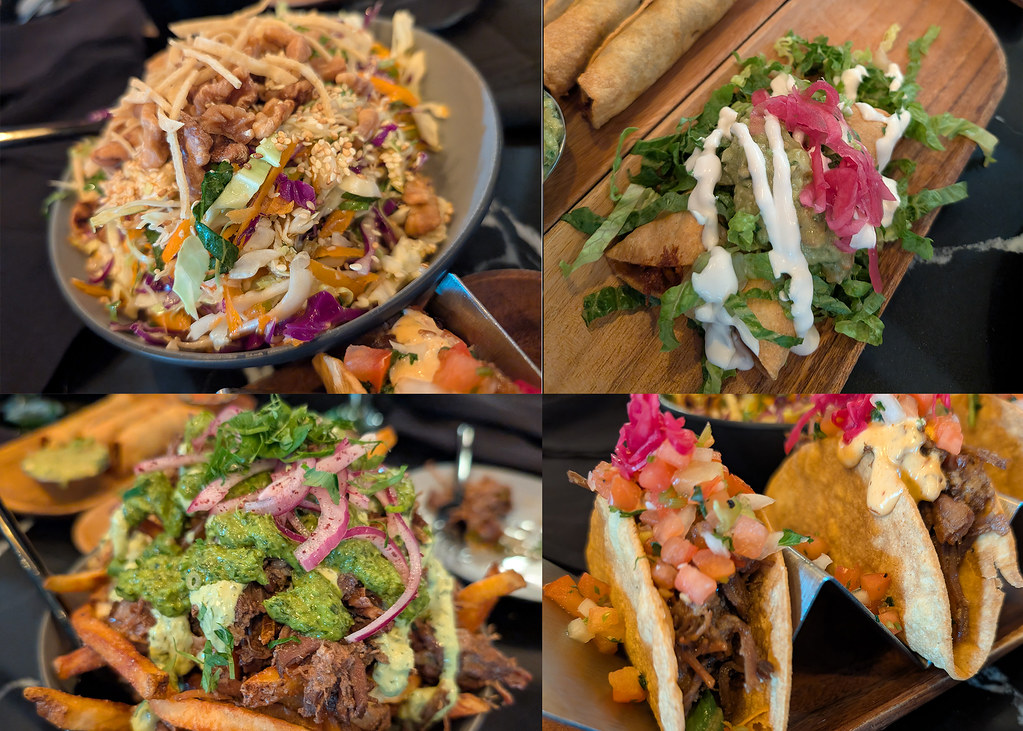
We ordered the following (clockwise from top left) Balagan Salad, Short Rib Taquitos, Carne Asada Tacos, and Pulled Brisket Fries:
One of my friends, Yehoshua, recommended Formaggi Pizza, so we made arrangements to meet up. We hadn’t seen Yehoshua since our last trip to LA, so we were happy to meet and catch up. Information about Formaggi Pizza can be found here:
This was my favorite spot in LA—the food was fresh and absolutely delicious. We ordered (clockwise from top left) a pesto pie, Hawaii pie, truffles pie, and rose pasta:

That evening, we had dinner at Beverly Hills Thai. The food was pretty good, but the restaurant’s layout was… well, a bit odd. To get to the bathroom, you actually had to walk through the kitchen. Since the restaurant is quite small with limited seating, reservations are a must. You can find information about Beverly Hills Thai here:
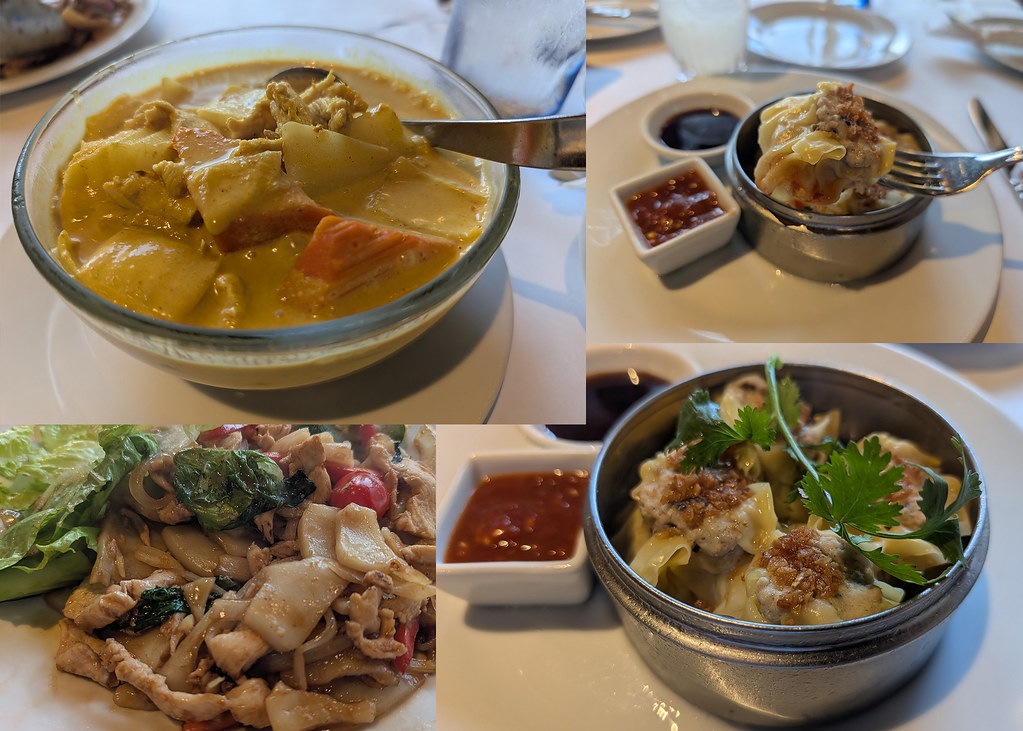
We ordered (clockwise from top left) yellow chicken curry, steamed dumplings (two pictures), and Pad Kee Mao:
On the following day, we made a quick stop at Bella’s + Bread + Butter, where the kids had some of the best cold foam coffee they ever tasted. DW and the kids took a Waymo to Bella’s—since we don’t have self-driving taxis in NYC, they were curious to give it a try:

Information about Bella’s can be found here:
Since we were too early for lunch and there wasn’t much of a food selection at Bella’s, we then headed over to Pizza World, for their fantastic nachos. Information about Pizza World can be found here:
We ordered (clockwise from top left) nachos deluxe, burrito, fiesta platter, and cheese quesadilla:

Yehoshua introduced me to the Too Good To Go app, which offers “Surprise Bags” of unsold food at steep discounts. He mentioned scoring some great items from Delice Bakery, so we decided to give it a shot. Our surprise bag included a baguette and a selection of pastries for a grand total of $5.99 —perfect to save for our flight to Hawaii the next day. Information about Delice Bakery can be found here:
We also headed over to Next Door for dinner. We ordered a selection of steaks, which everyone said was very good. Information about Next Door can be found here:
We ordered (clockwise from top) ragu fettuccini, rib eye steak, and mushroom gnocchi:

Part 4 – Returning To The Big Island (Kona Side Of The Island)
Early the next morning, we checked out of the Waldorf and made our way to the airport for our flight to the Big Island. I used Hilton credits from three credit cards to pay for the daily parking fee at the Waldorf, but completely forgot to take along some gift cards to cover the left-over balance. Thankfully, the front desk agent was perfectly fine with me using three separate credit cards to pay the daily parking fee.
The flight to Hawaii was uneventful, but somewhat disappointing—we weren’t given an amenity kit, and the only provided bedding was a thin, flimsy blanket. But that wasn’t even the worst part. Normally, the flight attendants on Hawaiian are friendly and welcoming—but not on this flight. Since Hawaiian Airlines doesn’t offer kosher meals on their flights—even in first class—I asked the flight attendant if they had any kosher snacks available. Her response: “We might have some in economy that you can purchase.” I was caught off guard at first, then replied—more than a little annoyed—“I’m not paying for snacks in first class.” I have written several times in the past to Hawaiian asking them why they don’t offer kosher meals, but have never received the courtesy of a response. Now that they are joined at the hip with Alaska Airlines, who also doesn’t offer kosher meals, I am not hopeful this will ever change.
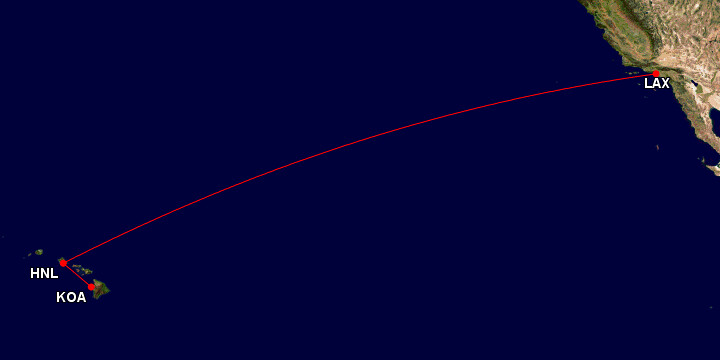
Photographs of our flight to Hawaii:

We arrived in Kona in the mid-afternoon, picked up our rental car, and made a couple of essential stops—first at Walmart, where we purchased two small toaster ovens (one for meat, one for dairy) along with other necessities, and then at Safeway to stock up on groceries. After that, we headed to the Mauna Kea Beach Resort, our home for the next five nights. Photographs of our two rooms:

Among the many activities offered by the hotel is a daily koi fish feeding, complete with complimentary fish food. There’s a large koi pond at the Mauna Kea Beach Resort that adds a serene touch to the grounds. We learned that the hotel originally imported the koi from Asia, and over time, they’ve naturally multiplied. The fish are surprisingly intuitive—they’ll swim right over when someone approaches, sensing your presence. But they’re also clever: if they realize you’re not feeding them, they quickly lose interest and scatter. When you do offer food, they make a distinct, amusing puckering sound, and some are even bold enough to eat straight from your hand. We enjoyed feeding the koi so much that we ended up doing it twice during our stay.
Here’s an interesting tidbit: koi fish don’t have a stomach. Instead, they have a long intestinal tract that absorbs nutrients as food passes through. Because they can’t store large meals, they need to be fed small amounts frequently—overfeeding can actually lead to health problems and they will keep eating as long as you keep feeding them.
Photographs feeding the koi fish:

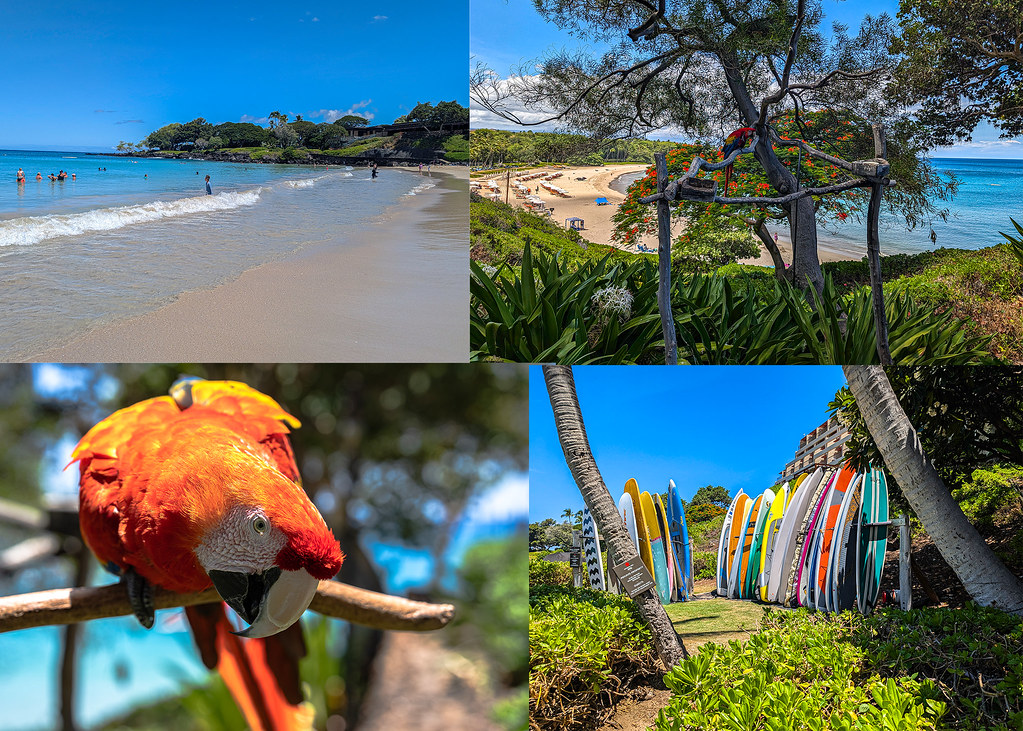
The hotel is home to a 46-year-old scarlet macaw named Mango. While many guests enjoy seeing him, there is some controversy surrounding his presence—some people believe he may be mistreated or showing signs of depression, and have called for him to be relocated to a sanctuary. Photographs of Mango and the beautiful beach at the hotel:
We spent our first Shabbos in Hawaii at the Mauna Kea Beach Resort. I prepared my usual fried potato kugel on an electric burner, while DW made a roast chicken in the crockpot. For the Shabbos day meal, we used MealMart boxed cholent meals, which we kept warm in a HotLogic:
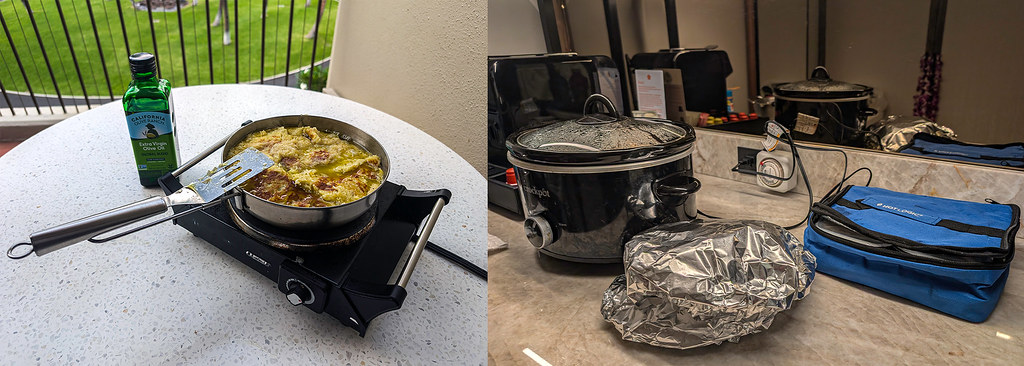
Once again, Middle Kid’s birthday came up during our time in Hawaii, so we baked her a birthday cake using Duncan Hines cake mix and Betty Crocker frosting, all made in one of the toaster ovens we picked up at Walmart:

Part 4a – Hanging Out With The Bees
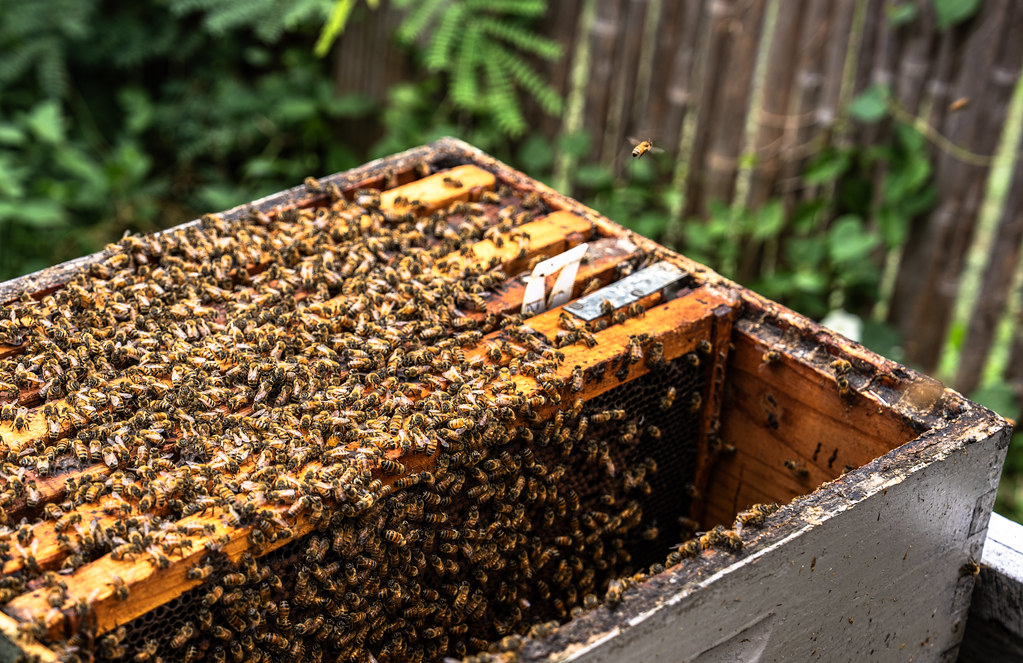
The morning after we arrived, we visited Big Island Bees for a farm tour. We had first visited in 2018, but I was really looking forward to going again—it’s such a unique and enjoyable experience. Information about Big Island Bees can be found here:
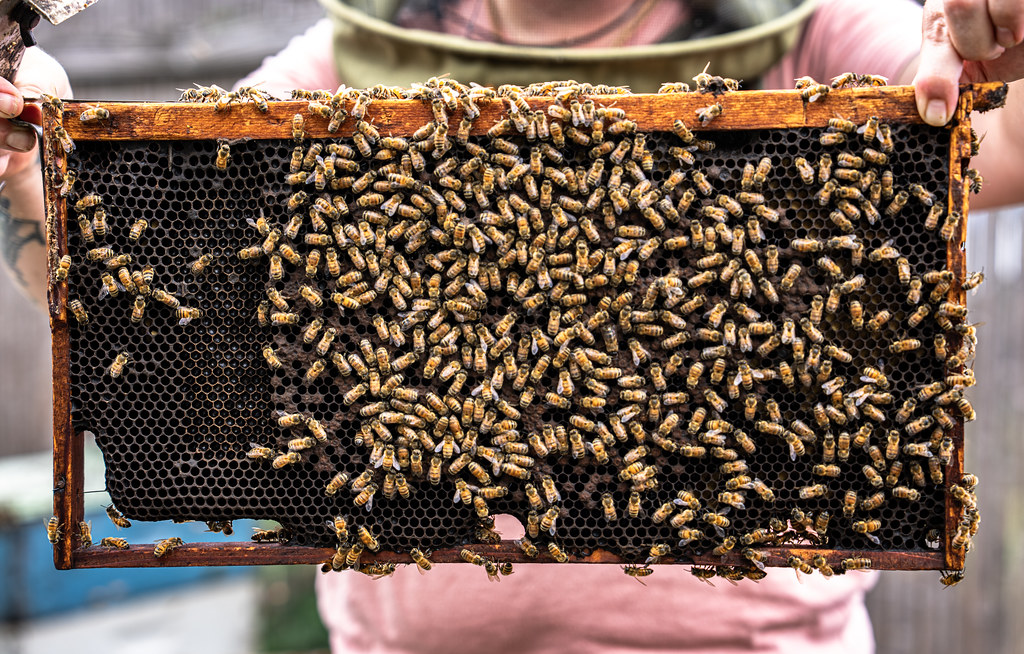
We were given a brief video presentation followed by a demonstration of how they maintain the bee hive boxes and harvest honey. Bee hive box:
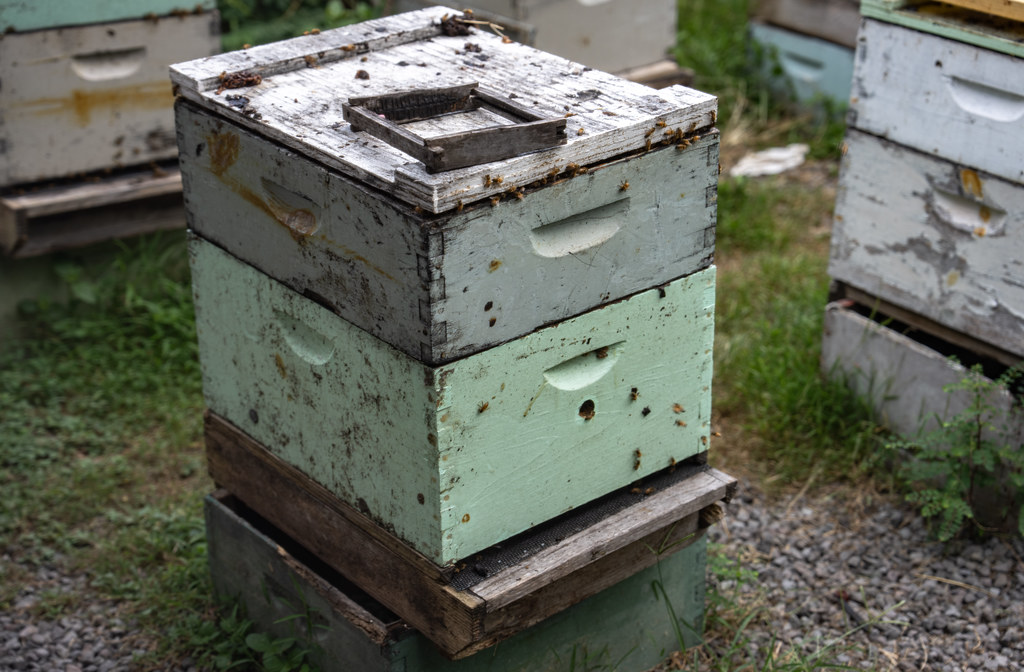
The bee hive box when open:
Holding one of the frames of the bee hive box:
The smoker, used to calm the bees:

Part 4b – Snorkeling The Kona Beaches
Everyone should have their own secret spots—and we have ours. I know it might seem odd to write a trip report and then not share every detail, but some places are best kept off the radar. In Kona, we’ve found a special snorkeling spot that we like to keep to ourselves, and we encourage you to discover your own hidden gems too. On this day, we snorkeled alongside a variety of vibrant tropical fish—and even spotted a sea turtle:


Part 4c – Sampling Amazing Kona Coffee
One of our favorite spots on the Big Island has always been Greenwell Coffee Farms, known for producing award-winning Kona coffee. They offer free farm tours and tastings of a variety of their blends. I was especially looking forward to returning—not just for the coffee, but to see Chai, who’s in charge of roasting the beans and also sometimes leading farm tours. She always warmly greets us whenever we come back, and we again received a royal greeting from her.
Information about Greenwell Farms can be found here:
https://www.greenwellfarms.com/?srsltid=AfmBOopIVsZ6YlkjSUDoXUgbqMhtf2Fltv0fxIv3VPM2u9P7tCARNWSx
A farm tour never gets boring:

We saw where they dried the coffee beans

And the tree nursery:
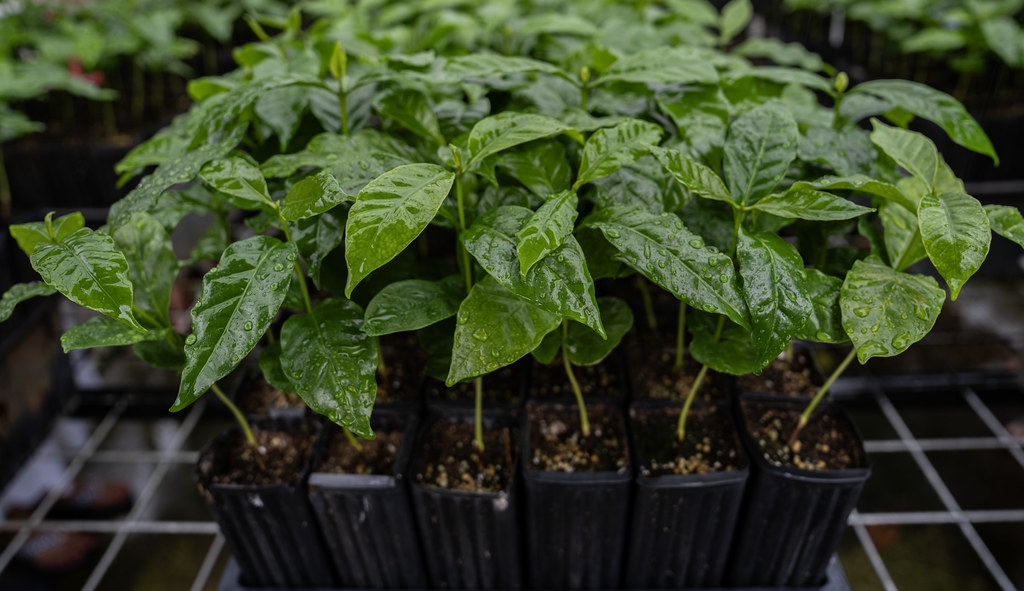
Groves of coffee trees:

Coffee cherries growing on the trees:

They also grow and sell black pepper, which we had the chance to pick and taste straight from the plant:

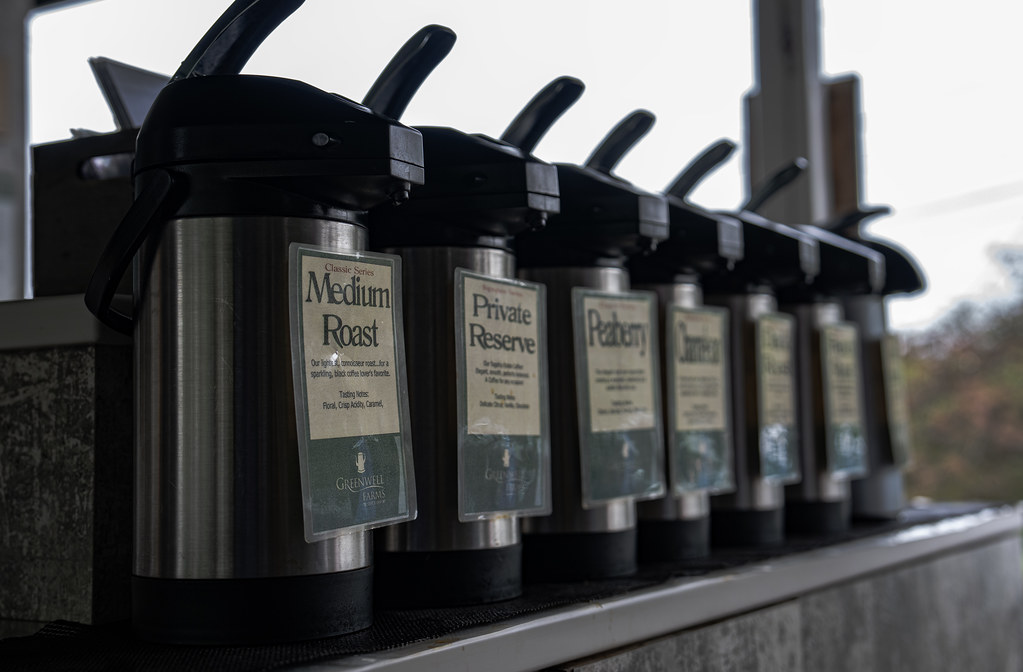
After the tour, we tasted a variety of our favorite blends:
Feeding a resident Saffron Finch (not native to Hawaii):

Part 4d – Snorkeling At Kealakekua Bay
Another of our favorite activities on the Big Island is snorkeling at Kealakekua Bay—a place rich in both history and natural beauty. It’s the site where Captain James Cook first landed in Hawaii and where he was later killed in 1779. Today, it’s better known for its incredible snorkeling and diving, with crystal-clear waters teeming with marine life, including the occasional pod of spinner dolphins. We booked a tour with Fair Wind Cruises, which has a large comfortable boat with restrooms. Fair Wind has large comfortable boats with plenty of space, but none of the complimentary food was kosher, not even the soda which was some obscure organic brand we had never heard of. Make sure you bring along your own food and drinks. Information about Fair Wind can be found here:
DW and the two younger kids booked a SNUBA excursion for an additional fee. SNUBA is similar to scuba diving, but instead of carrying a tank on your back, it floats on a raft at the surface while a hose delivers a continuous supply of air. A fun side story: In preparation for our snorkeling trip, DW and Oldest Kid wanted prescription snorkel masks, so we headed to the Scuba.com store (owned by Adorama) in Manhattan. While we were there, I noticed a raffle to win a scuba diving regulator valued at around $1,750. On a whim, I entered—and to my surprise, I actually won! I’m not quite sure what I’ll do with a scuba regulator, but I guess it’s a sign that I need to learn how to scuba dive.
Photographs of SNUBA:

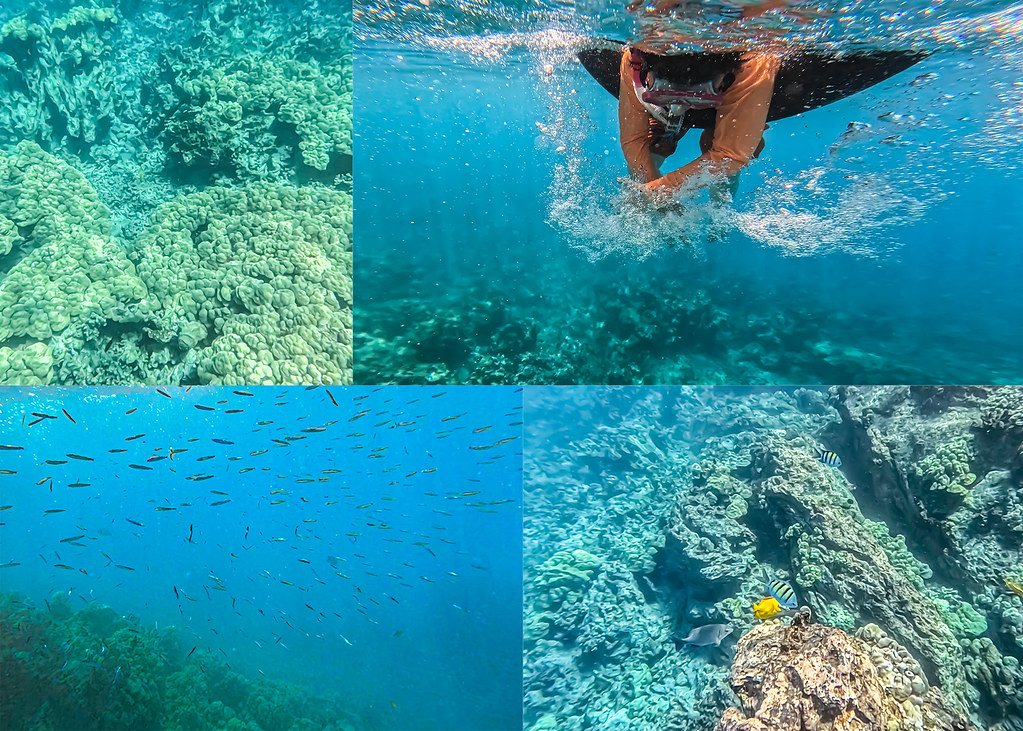
We also went snorkeling at Kealakekua Bay, where we saw an incredible variety of fish swimming among the coral reefs:
Part 4e – Snorkeling With Manta Rays
The Big Island is widely regarded as the best place to snorkel with manta rays—especially off the coast of Kona, which is renowned for its nightly manta ray tours. These tours take advantage of the plankton that gathers beneath bright lights after dark, attracting the manta rays, which create an unforgettable up-close experience. I had last done a manta ray tour in 2015 with our two older kids, but this time, DW and Little One joined in as well. We also booked the tour with Fair Wind, who offers a 20% discount on a second booking when you sign up for multiple tours. Since the manta ray tour was the less expensive of the two, we booked it first and used the discount code for our snorkeling trip at Kealakekua Bay.
Earlier this year, one of my friends reached out for advice on a family trip he was planning for the Big Island. It turned out that they were planning to be on the Big Island around the same time as us. We ended up meeting in person for the first time while there and coordinated our schedules to take the manta ray snorkeling tour together.
Information about the manta ray snorkeling tour can be found here:
During our tour, we saw an incredible eight manta rays gracefully gliding and looping beneath us while feeding on plankton. The larger manta rays weren’t shy, and came within inches of us, and a few even gently bumped into us. It was truly an incredible experience.
Manta ray rising from the deep:
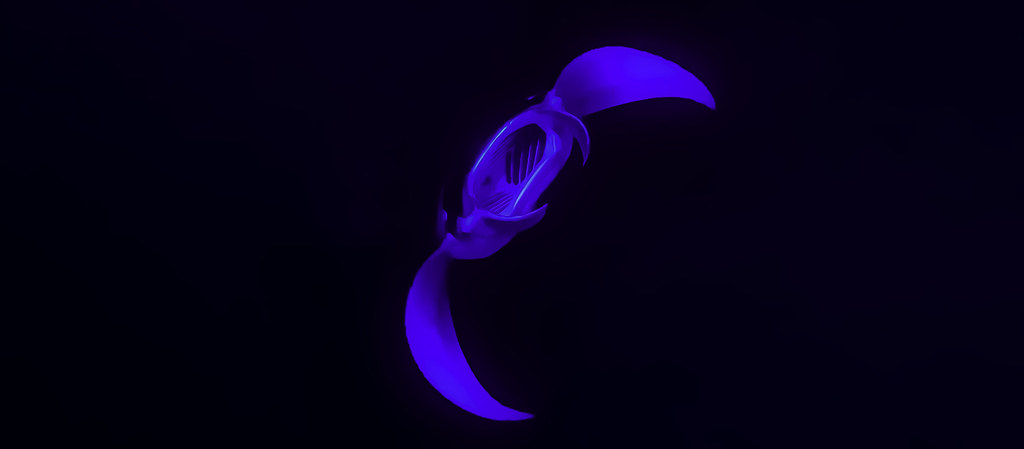
Two manta rays feeding:

This manta ray wasn’t shy and bumped right into Little One:

Part 4f – Pololū Valley
We’ve visited Pololū Valley several times over the years, most recently in 2022, but its beauty never gets old. Known for its lush greenery, dramatic cliffs, and striking black sand beach, Pololū remains one of the Big Island’s most breathtaking spots. Remembering the steep hike from our last visit, DW, Middle Kid, and Little One decided to sit this one out. So, Oldest Kid and I made a quick return—running down the trail and back up for a short but rewarding visit.
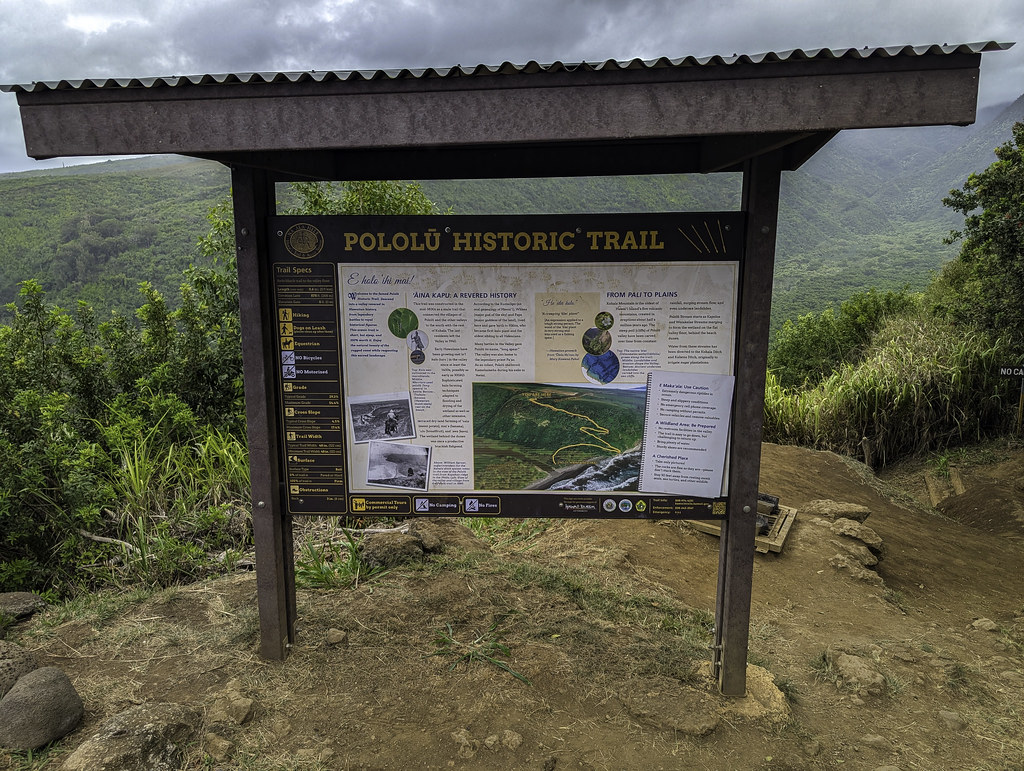
Signage at the top, with many warnings:

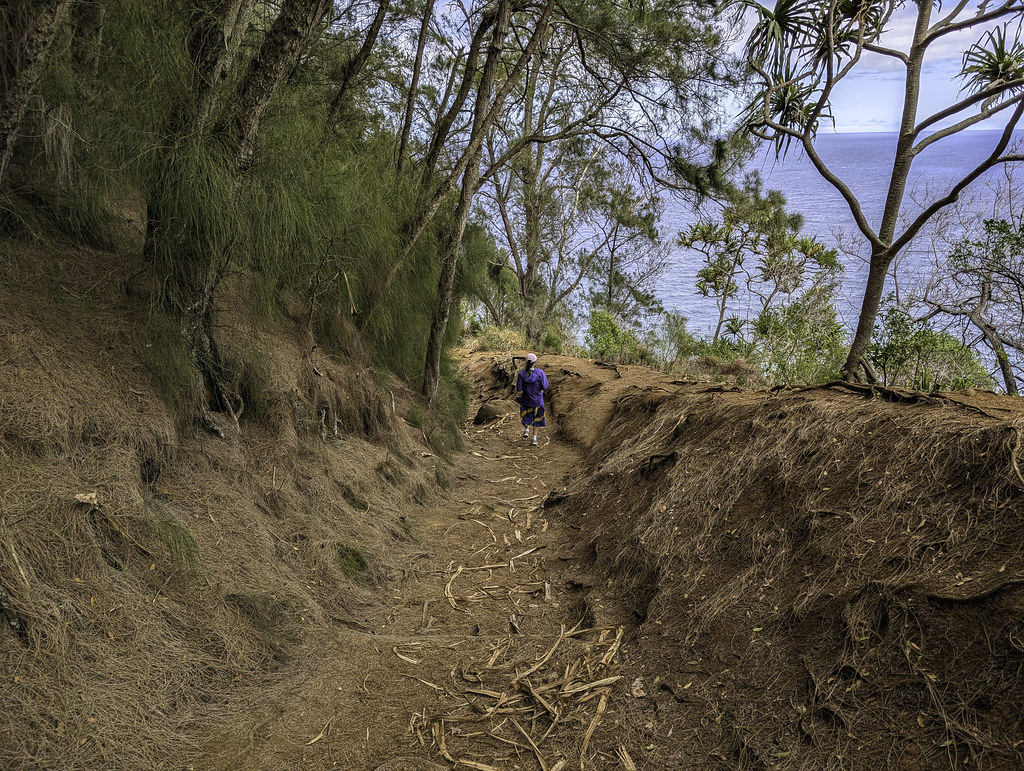
The beginning of the steep hike to the bottom:

Heading down the trail:
The beautiful black sand beach at the bottom of the valley:


After a brief stay at the bottom of the valley, Oldest Kid and I raced back up where DW and the other kids were waiting for us. Even though we didn’t stay long, it was still very enjoyable. If you’re able to walk up a short but steep trail, I urge you to visit Pololū.
Part 5 – Hilo & Volcano – The Adventurous Side Of The Island
After five nights in Kona, it was time to head to Volcano, where we’d spend the rest of our stay on the Big Island. We revisited some of our favorite spots in the area, and I finally had the chance to take a tour with the world-renowned birding expert, Jack Jeffrey.
Part 5a – Hilo Farmer’s Market
Since our first full day in this area turned out to be a Wednesday, we headed over to the Hilo Famer’s Market, for an assortment of exotic fruits and to buy souvenirs for friends back home. Although the Farmer’s Market is open every day, Wednesday and Saturdays are the “Big Market Days.” Information about the Hilo Farmer’s Market can be found here (make sure to check the coupon section):
Photographs of the market:

Little One and I picked up some coconuts—while they would’ve been even better chilled, they were still refreshing:

Part 5b – Akaka Falls State Park
Akaka Falls is known for its 442-foot waterfall and lush surrounding tropical vegetation. We had visited this park several times in the past, and it’s still one of my favorite spots to visit. There is a paved loop trail through the park, with elevation gain and stairs along the way. It’s well worth a visit. Information about Akaka Falls State Park can be found here:
Park entrance:

Lush greenery:

Bamboo forest:

Here’s a photo of the falls from 2018—yep, I’m lazy and still using the old one but it hasn’t changed:

Part 5c – Making Something Fishy Jealous at Hakalau Forest National Wildlife Refuge (Pua Akala Tract)
Hakalau Forest National Wildlife Refuge is a sanctuary for some of the rarest native species in the Hawaiian archipelago. Established in 1985, the refuge spans over 32,700 acres of pristine montane rainforest (a rainforest that grows on mountains) and provides critical habitat for endangered native birds, as well as countless endemic plants and insects found nowhere else on Earth. This area was set aside to protect endangered forest birds and their habitat. As a result, it is closed to the general public and can only be accessed with a permitted guide. Information about Hakalau can be found here:
https://www.fws.gov/refuge/hakalau-forest
A few years ago, I became acquainted with Jack Jeffrey through my photographer friend, Bruce Omori. Jack is a professional wildlife and nature photographer, birding guide, and wildlife biologist who worked at Hakalau for 30 years before retiring. His deep knowledge of the reserve’s unique flora and birdlife makes him one of the most sought-after guides on the island.
Back in 2022, I had planned a photo tour with Jack during a previous trip, but heavy rain forced us to cancel—and unfortunately, I wasn’t able to reschedule before we had to leave. This time, luck was on my side. I booked a private tour with Jack, one of the few individuals licensed to lead tours within the refuge. Jack shared the history of the land and the reasons why various species went extinct—including a domino effect, where the decline of certain species of flora and fauna led to the disappearance of certain endemic birds. He also spoke about the challenges that persist today and the ongoing conservation efforts to protect this remarkable ecosystem. If you’re interested in birds or Hawaiian endemic species, a tour with Jack Jeffrey won’t disappoint.
You can learn more about Jack Jeffrey here:
Entrance to the reserve:

I had the opportunity to photograph a variety of bird species, but unfortunately, the critically endangered ʻAkiapōlāʻau eluded my camera. Although we saw and heard it, it remained high in the canopy, well beyond the reach of my lens. I did see the Hawai‘i ‘amakihi, a small Hawaiian honeycreeper. The amakihi is a generalized forager that eats insects and it also feeds on nectar from several flowers, including the ‘ōhi‘a:

Here is an ʻiʻiwi or scarlet honeycreeper, which primarily feeds on nectar of the ‘ōhi‘a blossom:
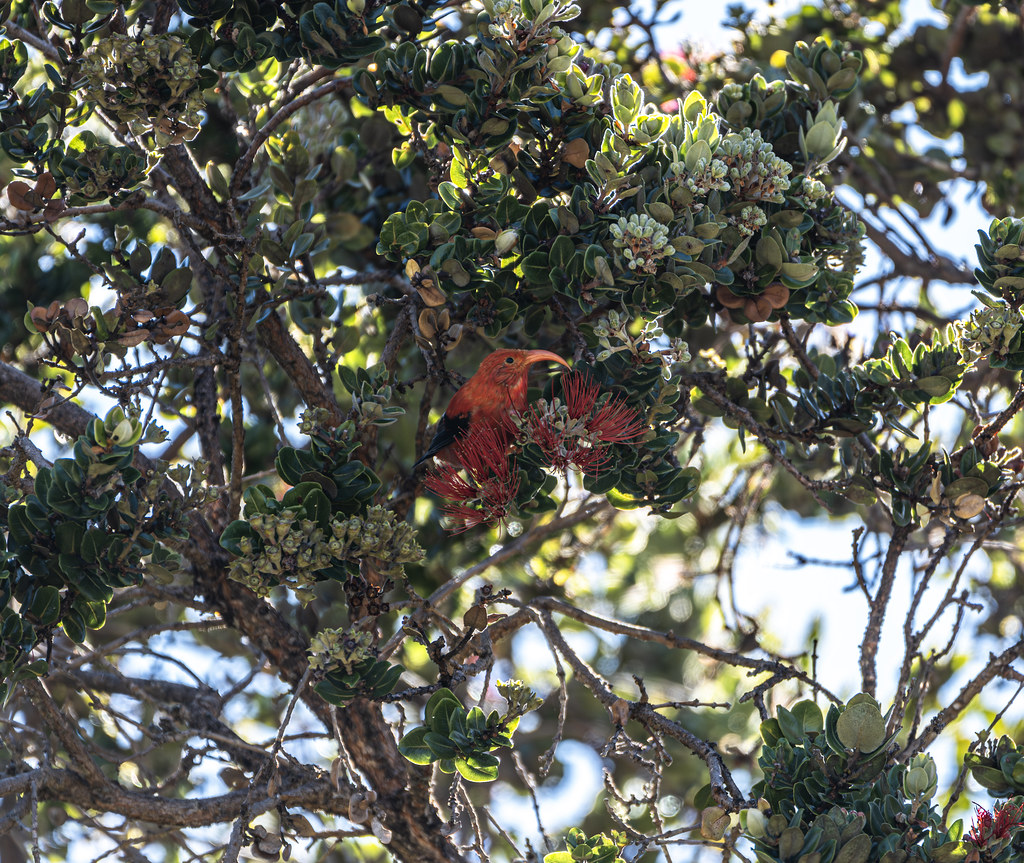
Here is an ʻapapane honeycreeper, which feeds on insects and nectar:

And here is a Hawai‘i ‘elepaio, a small monarch flycatcher:

Hāpuʻu ʻiʻi or Hawaiian tree fern:

‘ōhi‘a blossom:

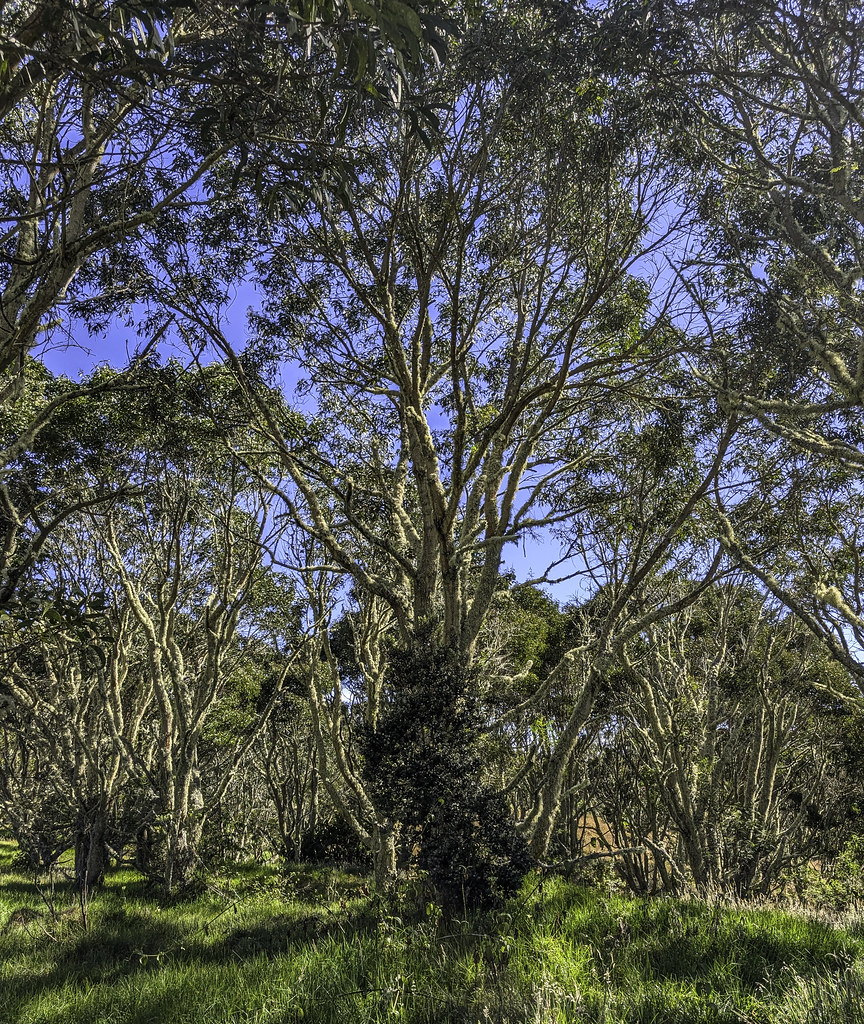
Here’s an ‘ōhi‘a tree growing in front of a koa tree—what’s fascinating is that they’re exactly the same age. However, koa trees are fast growers, while ‘ōhi‘a trees grow much more slowly, which explains the striking difference in their size:
Part 5d – Hawaii Volcanoes National Park
No visit to the Big Island is complete without a visit to Volcanoes National Park, famous for many of its geological features. Information about the park can be found here:
https://www.nps.gov/havo/index.htm
Although the park is home to two active volcanoes—and Kīlauea recently been erupting—we somehow completely missed the show. It erupted before we arrived, quieted down during our stay, and started up again after we left. While we’ve seen surface flows and ocean entry on previous trips, we’ve never witnessed fountaining lava, which Kīlauea had recently displayed. I suppose that gives us a good excuse to return someday.
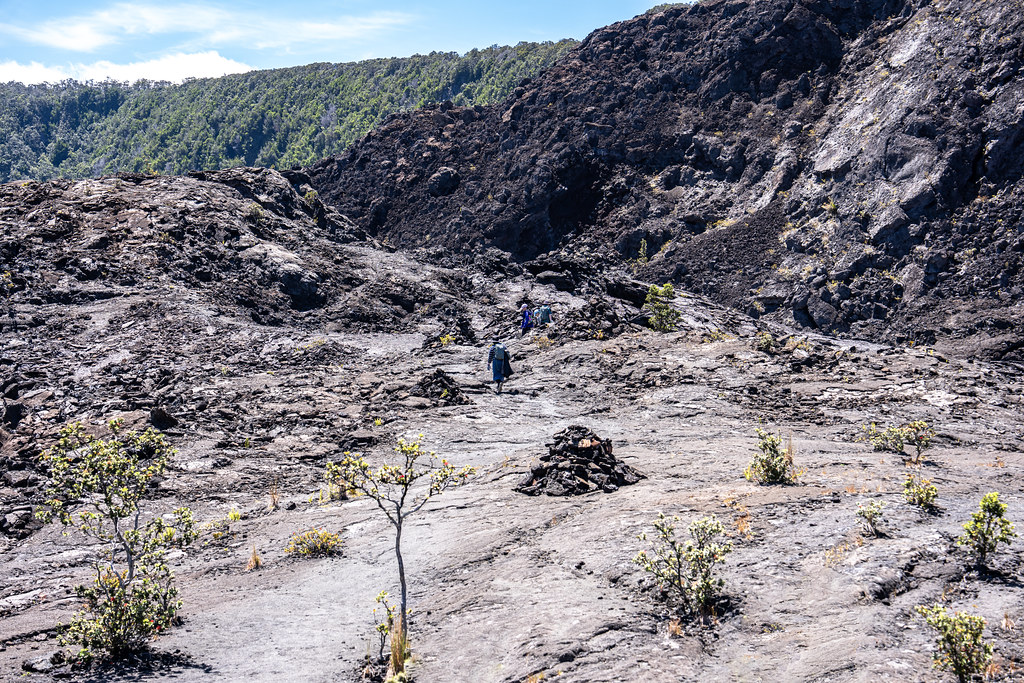
But we finally checked something off our list that we’d never done before. While we’d hiked parts of the Kīlauea Iki Crater trail in the past, this time we completed the entire rim-to-rim route. It’s something I’d always wanted to do—and we actually did it. Even better? I didn’t have to bribe the kids to come along. They were even on board to tack on an extra half mile to explore the Byron Ledge trail.
Fun fact: Kīlauea Iki last erupted in 1959, shooting lava fountains as high as 1,900 feet and forming a lava lake inside the crater. Today, the surface has long since cooled, and you can walk right across it. So yes—here, the floor really was lava.
Here is a photograph taken of the 1959 eruption:

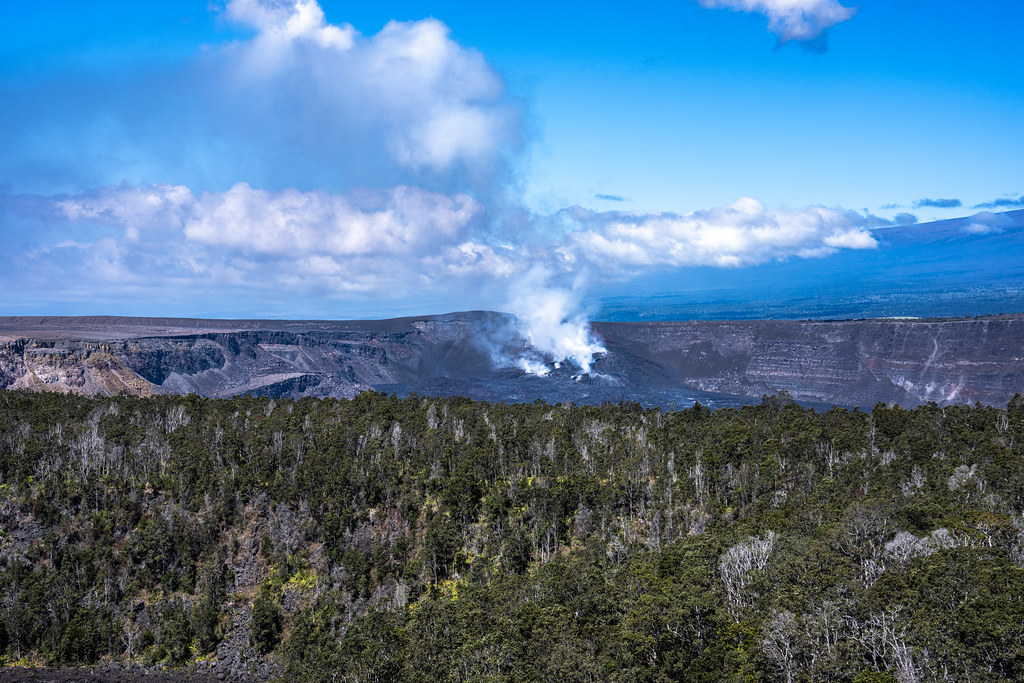
And here is a current view of the crater from the rim:

We were able to see steam rising from Halemaʻumaʻu Crater during our hike along the rim:
Walking along the crater:

Beautiful ‘Ohi‘a blossom inside Kīlauea Iki Crater:

We also drove the Chain of Craters Road down to sea level, stopping at various view points along the way, until we made it to the Hōlei Sea Arch:

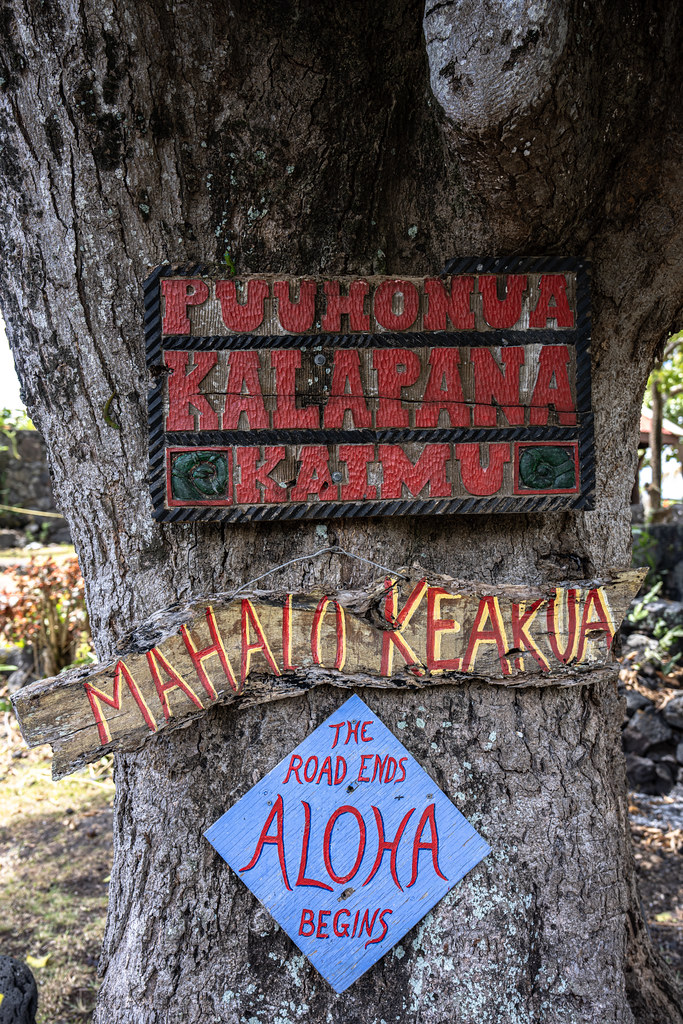
The “end of the road” is a short distance from the sea arch:

As of 2018, parts of the road had been covered by lava in 41 of the previous 53 years, thanks to repeated eruptions from Kīlauea. During the 2018 Leilani Estates eruption, a gravel emergency access road was built across the flow. So technically, there is a road there now—but it’s gated and closed to the public. I didn’t realize that at the time and started walking past the gate, expecting to see the familiar sight of lava cutting off the road like in the past. I kept walking… and walking… until it finally dawned on me that something had changed. At that point, I turned back. As the old saying goes, the only constant is change.
Views of lava flows along the road:


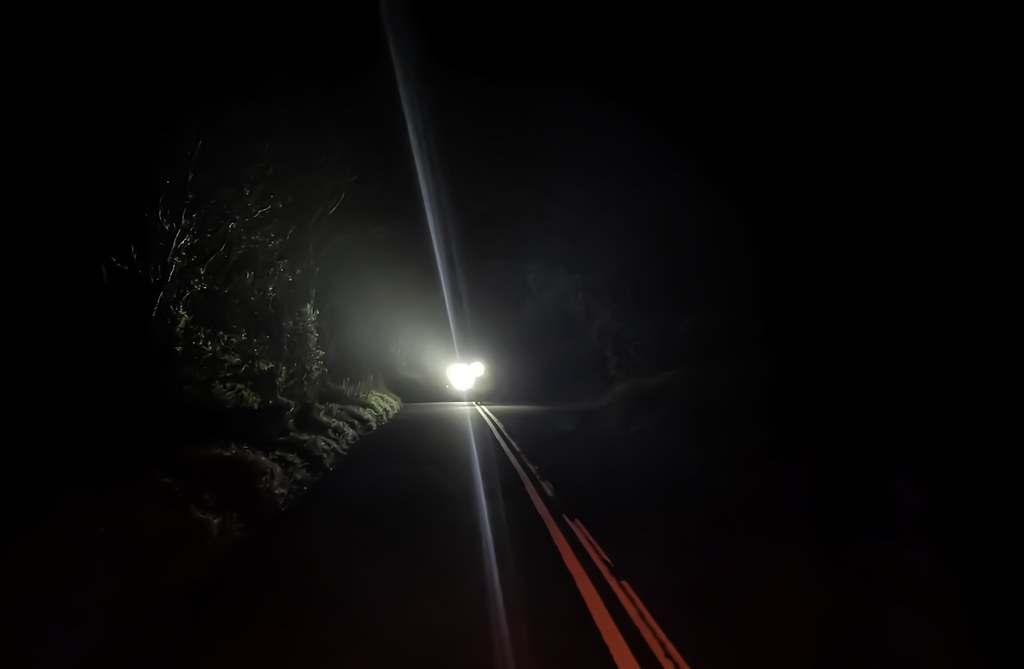
We did attempt a nighttime trek hoping to view the eruption, but sadly there was nothing to see. Here we are walking back in the dark of night using our headlamps to illuminate the way:
Part 5e – Punaluʻu Beach
Since Punaluʻu Beach isn’t far from Volcano, we made a quick stop for a return visit. Beaches are few and far between on this part of the island, and while the ocean here can be rough and not ideal for swimming, Punaluʻu is worth the visit for its dramatic black sand and the beautiful freshwater pond just inland, covered in pretty, but invasive, water hyacinth. It’s also a well-known spot for sea turtle sightings—though none showed up for us this time.
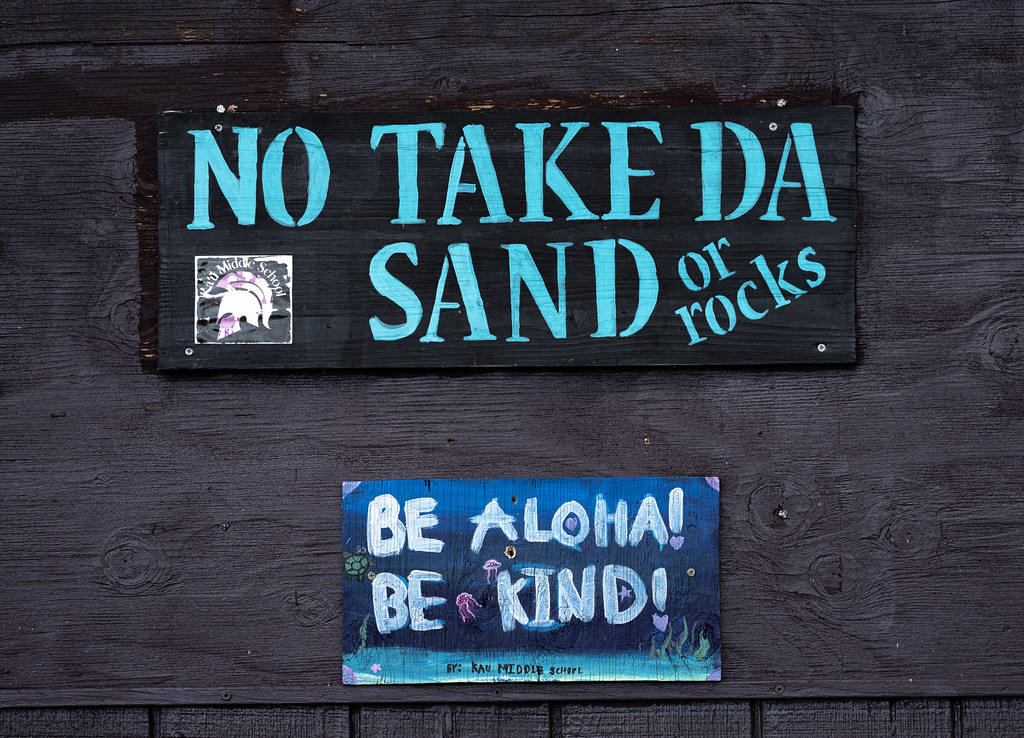
While we were there, I noticed a funny sign posted on one of the beach shacks and wanted to snap a photo. It was Sunday, and the beach was busy with locals. Three women were sitting directly beneath the sign, so I walked over and asked if I could take a picture. One of the men nearby grinned and said, “They’re all available.”
I laughed and replied, “Thanks, but I already have one.”
He shot back, “Take another one.”
I told him, “I can barely handle the one I’ve got,” and the whole group burst out laughing.
So, word to the wise: if you’re in the market for a first, second, third—or even fourth—wife, swing by Punaluʻu on a Sunday. You just might find your pick of the litter sitting under this sign:
The black sand beach:

Pond behind the beach with water hyacinth:


Part 5f – Hawaii Tropical Botanical Garden
The Hawaii Tropical Botanical Garden receives positive reviews for being a unique and beautiful botanical garden with thousands of rare and endangered plants from all over the world. We had never previously visited this botanical garden, and added it to our to-do list. Although they offer guided tours, they are priced at $95 per person, so we opted for general admission tickets at $32 per person for adults, and $22 for kids. Information about the Hawaii Tropical Botanical Garden can be found here:
Garden entrance:
There is a large orchid collection at the garden, including these Moth Orchids:


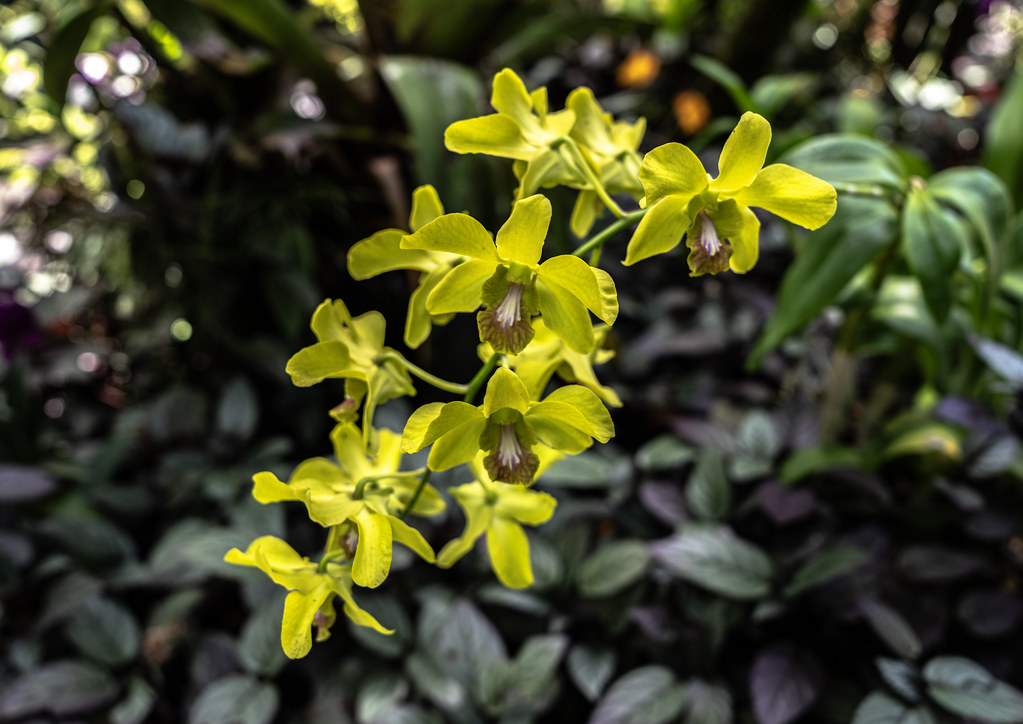
Yellow Orchids:
Exotica Begonia (native to New Guinea):

Walking Iris:

Torch Ginger:
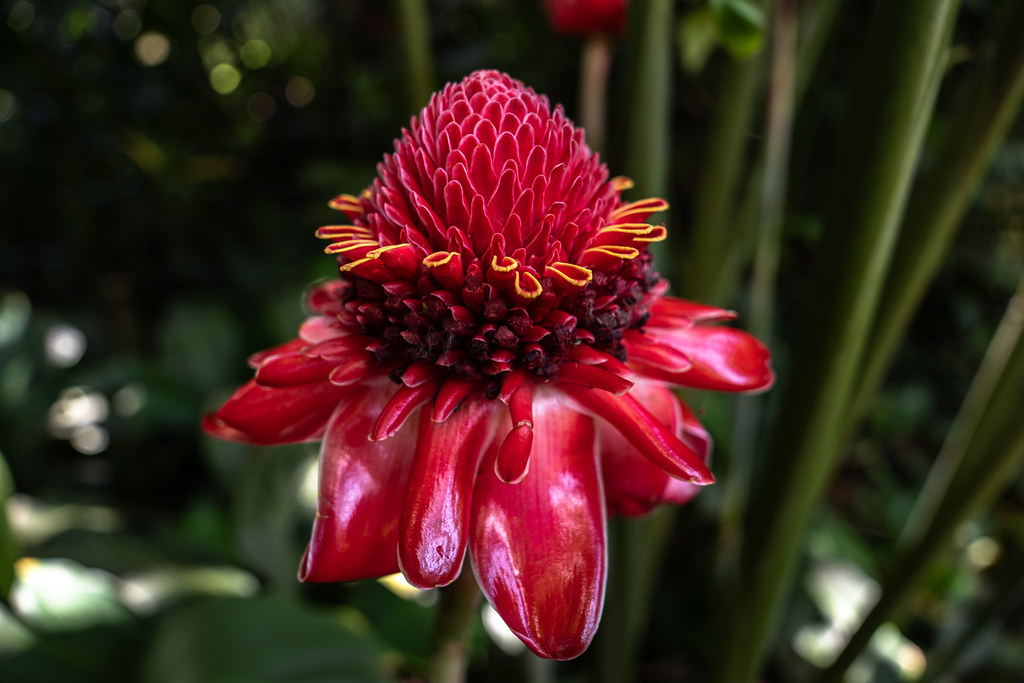
We would have stayed longer at the botanical garden, but the heat was oppressive—and Little One, clearly unimpressed, made his boredom well known. And this one wasn’t worth the bribe. Still, if you’re a fan of lush gardens and exotic plants, the Hawai‘i Tropical Botanical Garden is definitely worth a visit.
Part 5g – Mauna Kea
Some places are worth revisiting, even if they’ve changed over time. The Mauna Kea visitor experience may no longer be what it once was—gone are the free telescopes manned by passionate volunteers (ended in 2019) and the complimentary hot water for tea and soup cups. Still, despite these changes, it remains a place worth returning to. Since the summit (approximately 13,803 feet) now requires mandatory 4wd vehicles, and children under 13 are not recommended to go above the visitor station (9200 feet), we stuck to the visitor station. We made sure to drive up to the visitor station before dark, in order to view the sunset. Also, after dark, there is a nightly ranger led presentation, which we were able to attend.
Before heading up the mountain, I realized I’d forgotten to pack a warm sweatshirt—and temperatures on Mauna Kea can get surprisingly cold, even in summer. We made a quick stop at Walmart, where I grabbed an inexpensive hoodie. It ended up being the difference between staying relatively comfortable and being completely miserable.
Middle Kid and Little One snuggling under a blanket while observing the sunset:

Watching the last glimmer of fading sunlight:
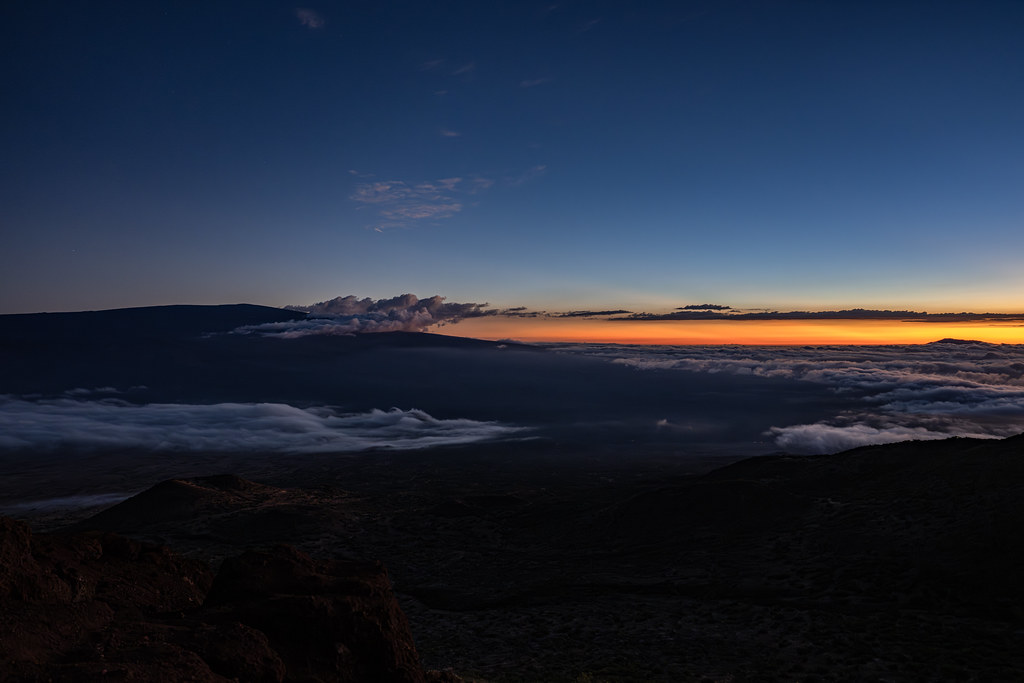
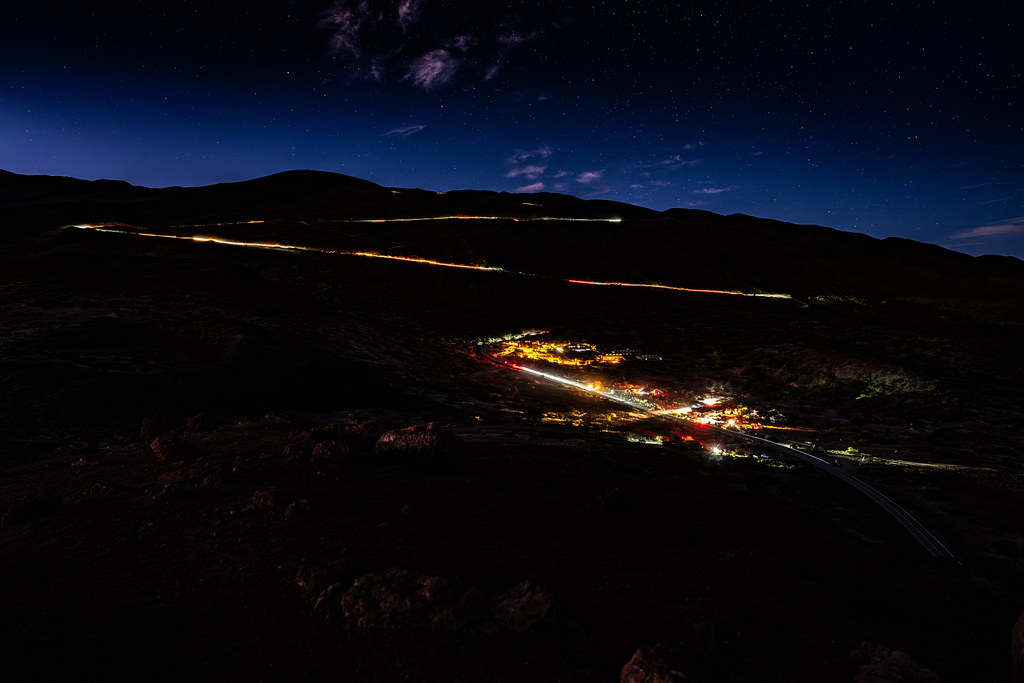
After sunset, all visitors are kicked off the summit, and here you can see a stream of cars headed down towards the visitor center:
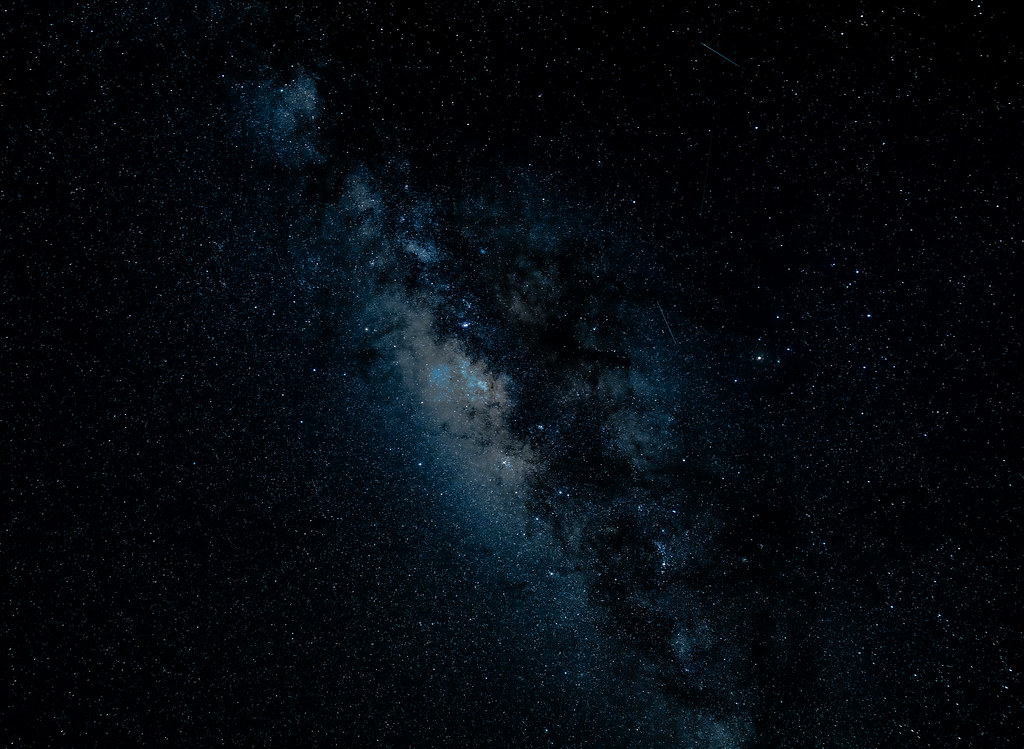
Photograph of Oldest Kid stargazing with the foreground illuminated using the red light setting on my headlamp:

The Milky Way in all its glory:
Part 5h – Kalapana
Another of our favorite spots on the Big Island is Kalapana, a historic fishing village that is home to generations of Native Hawaiian homesteaders. Although Kalapana was largely destroyed by lava flows from the Kīlauea volcano in 1990, new homes are being built on the fresh lava fields, and native Hawaiians are continuing to live in the traditions of their ancestors. Kalapana is the area we used to hike out from to view surface lava flow and ocean entry in years past, but there is no active surface flow at the moment.
There used to be a black sand beach at Kalapana, but it is mostly washed away now.
On the way to the beach:

Noni tree growing along the path to the beach:

The black sand beach in January of 2015:
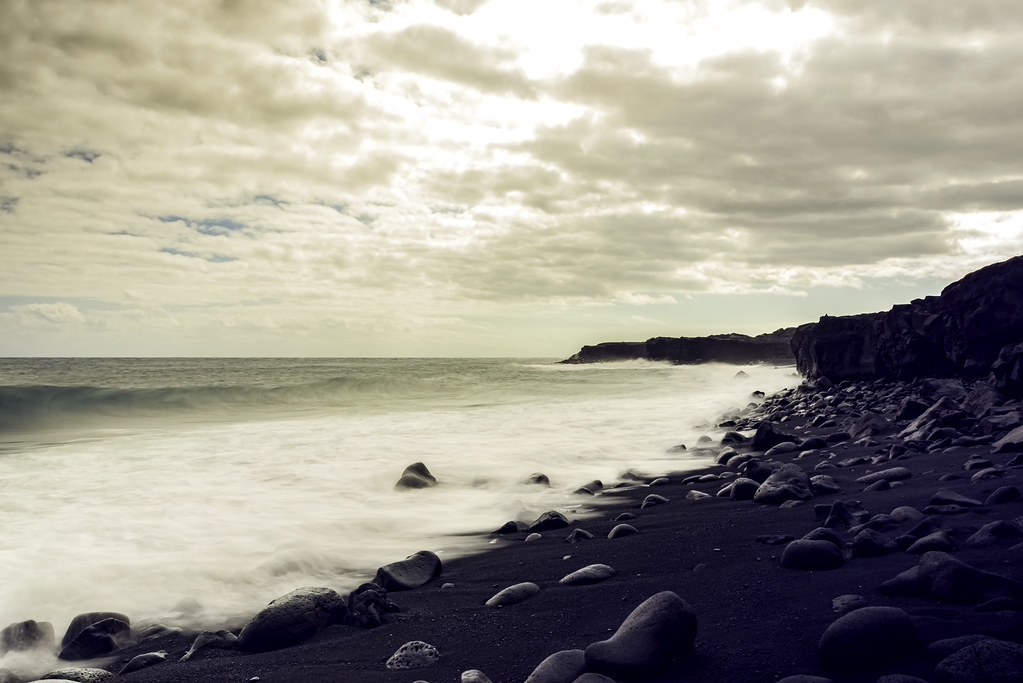
Today, most of the beach has been washed away, but you can still witness the ocean’s power from the cliffs overlooking where it once stood:


Pāhoehoe lava flow from years past:

From Kalapana, we drove over towards Pohoiki Beach with its new black sand beach, stopping at a pretty cove along the way:

We drove along the road as long as possible. This is the lava flow that blocked the road:
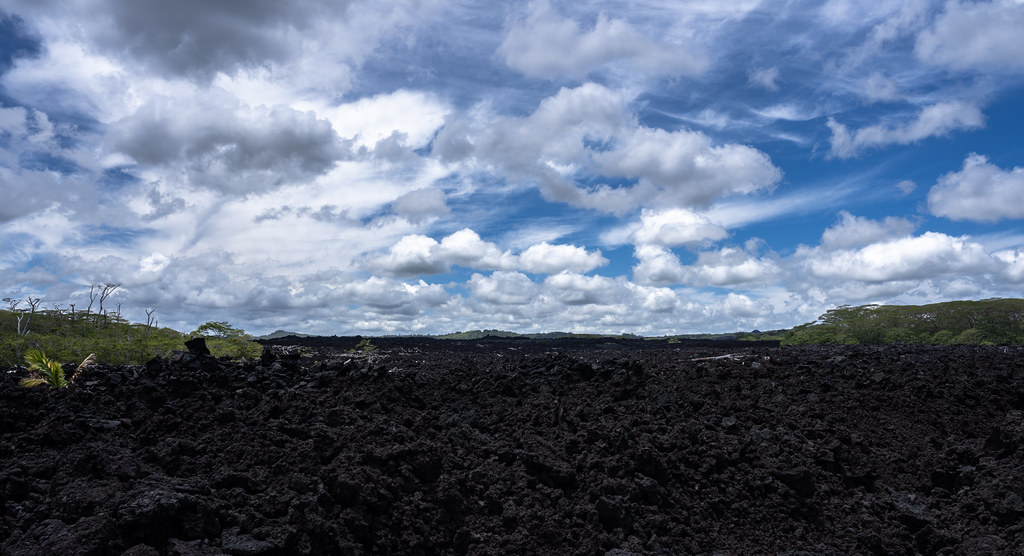
Here is the end of the road where the County is doing work:

Afterward, we arrived at Pohoiki Beach, which was a bit challenging to reach—we had to walk through a shallow, volcanically heated pond that was surprisingly hot. I wasn’t prepared for the water crossing, but luckily was wearing an old pair of sneakers that needed replacing anyway. There’s also a volcanically heated hot spring at Pohoiki, and next time, I’ll be sure to come prepared for a proper soak.
Photograph of the new black sand beach:

Pohoiki Beach is located within Isaac Hale Beach Park and was once home to a functional boat ramp—until it was blocked by lava during the 2018 Kīlauea eruption. The Pohoiki ramp was the only boat launch in the entire Puna district, and many locals, including fishermen and tour operators, relied on it for ocean access and their livelihoods. This was the very spot where we took a lava boat tour back in January 2013 (before I began writing trip reports). Currently, the county is dredging the area to remove the sand and lava debris that accumulated during the eruption, with the goal of restoring a wide, navigable channel to the ramp.
Part 5i – Lava Tree State Park
On the way back from Pohoiki Beach, we stopped at Lava Tree State Park, which features hollowed-out lava tree molds, which are stone sculptures left behind by a lava flow from the Kilauea volcano that enveloped these trees sometime in the 1700s or 1800s. There is a 0.7-mile paved loop trail to see these unique lava trees.
Information about Lava Tree State Park can be found here:
https://dlnr.hawaii.gov/dsp/parks/hawaii/lava-tree-state-monument/
Some of the lava trees at the park:

Part 5j – Mauna Loa Macadamia Nut Visitor Center
If you find yourself in Hilo, we highly recommend visiting the Mauna Loa Macadamia Nut Visitor Center. They offer a free tour of their factory, and the on-site store has unbeatable prices on a wide variety of products—many of which are kosher. Behind the store, there’s also a charming garden filled with fruit trees, and visitors are welcome to pick whatever they like, free of charge. We enjoyed our visit so much that we ended up going back a second time—eating their delicious kosher ices, stocking up on macadamia nuts for ourselves (my favorite is the coffee/chocolate coated mac nut), gathering lots of free fruit, and picking up plenty of souvenirs for friends back home.
Information about the Mauna Loa Macadamia Nut Visitor Center can be found here:
https://hawaiianhost.com/pages/maunaloa-visitor-center
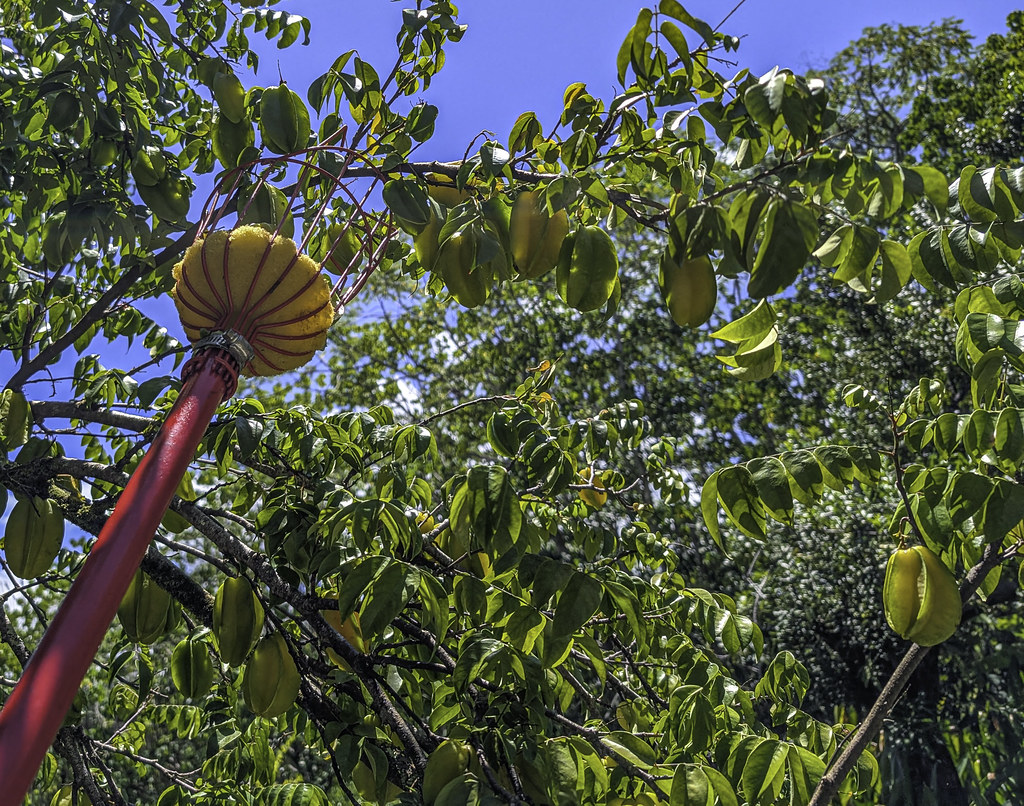
Starfruit growing behind the visitor center:

We were even provided with an extendable fruit picking tool, in order to gather fruits from the trees.
Part 5k -ʻImiloa Astronomy Center
DW and the older kids last visited the ʻImiloa Astronomy Center in 2010, but they were eager to return. ʻImiloa offers a unique blend of modern scientific discovery and traditional Hawaiian culture and navigation, with interactive exhibits and a state-of-the-art planetarium. The kids had a great time exploring the interactive displays, and we all enjoyed an astronomy presentation in the planetarium. Information about the ʻImiloa Astronomy Center can be found here:
The older kids exploring ʻImiloa in 2010

They’re not little kids anymore:

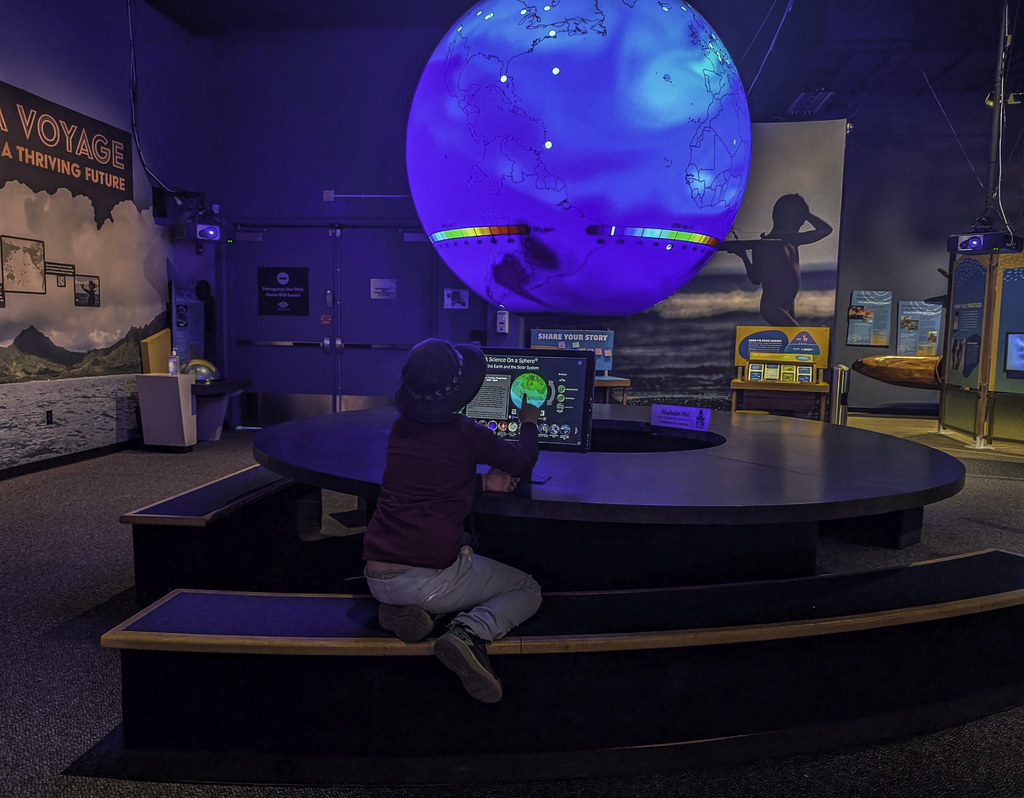
DW’s favorite interactive exhibit – a “Science On A Sphere” animated globe that displays planetary data (she wants me to buy her one):

Part 6 – The Long Way Home
After nearly three weeks, it was finally time to head home. We packed up in Volcano and made our way to the Hilo airport for our connecting flight to Honolulu and then back to the mainland. Before leaving Hilo, we made a quick stop at Bruce’s place to drop off a few things we weren’t bringing back—and to check out his farm.
Just look at the size of this avocado:

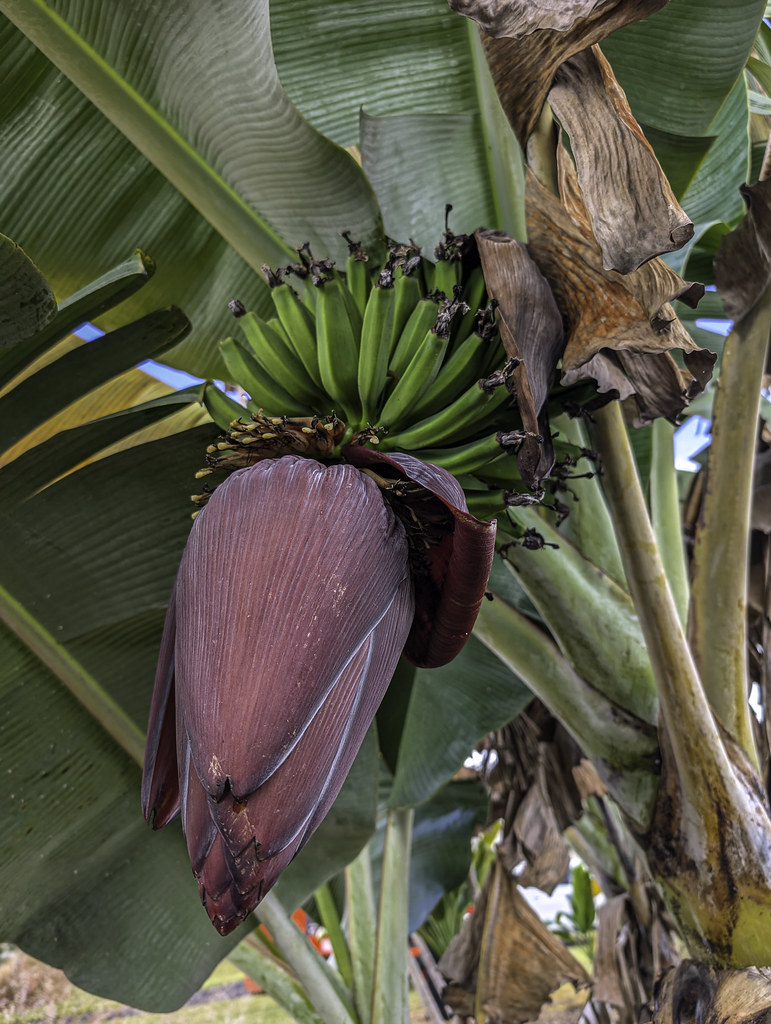
Bruce also had some apple bananas growing on his farm, but sadly, they weren’t ripe enough to eat:
Our flight was booked on Hawaiian Airlines First Class, and once again, no kosher meals were available. However, this time we were provided with comfortable bedding and a well-stocked amenity kit, which made the flight a bit more pleasant:


Part 7 – Conclusion
Once again, we didn’t manage to see everything on our list, and a few things didn’t go quite as planned—but all in all, everyone had a great time. Thanks for reading, and we hope you enjoyed following along with our trip report!
Aloha
Keep exploring

Into the Volcano: Fire, Ice, and a Camper Truck Across Iceland (2015)
A camper-truck journey through Iceland took us inside a volcano, across a glacier by super jeep, past waterfalls and ancient icebergs, and…
Tiny Wings, Grand Views: An Arizona Family Adventure (2015)
From the Grand Canyon and ancient pueblo ruins to lava fields and the brilliantly colored landscapes of Petrified Forest, our return to…
Wild West Adventures: Exploring Idaho, Montana, & Wyoming by Motorhome (August 2024)
From lava fields and nuclear history to fly-fishing on the Snake River, Yellowstone geysers, Old West towns, and sapphire hunting, our family…
More stories from the road
Get the next trip report by email.
Support TravelMacher
If you’ve enjoyed the trip reports and photographs, consider supporting TravelMacher. Your contribution helps cover travel expenses, camera equipment purchases, and the costs of running the site.
Support is optional. Thank you for reading.
Leave a Reply